MapTheOdd / Natural world / The acid springs of another planet
Natural world · USGS
The acid springs of another planet
Danakil, Ethiopia · 14°14′N · 40°18′E
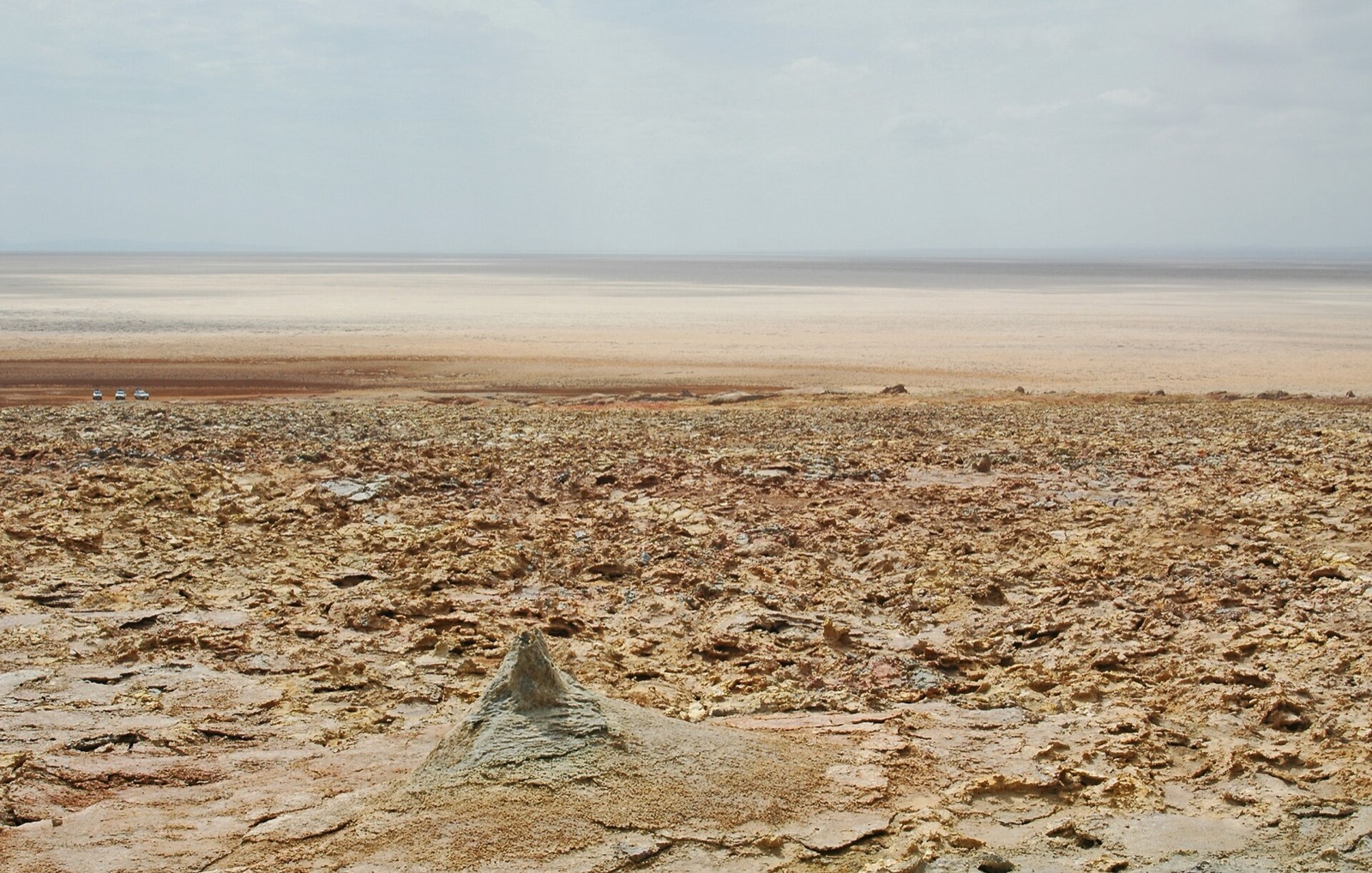
Hydrothermal activity creates intensely coloured salt formations.
Field note
Hydrothermal activity creates intensely coloured salt formations. Map and record layers place this feature in its wider geographic, historical and civic context.
Why it is unusual
The place exposes a geological, ecological or atmospheric process in a form that can be read in the landscape.
When to go
Check the local dry and cooler season; rainfall and heat matter more than daylight.
Evidence and practical context
USGS earth science data. The dataset supports discovery and context; inspect the original record for its full description, boundaries and status.
Place intelligence v2
What the surrounding data reveals
unknown relative to mapped settlements · access signal: generally accessible · evidence confidence 82/100.
Nearest cross-dataset oddities
Similar elsewhere in the world
Distances are straight-line approximations. Rarity is measured within MapTheOdd’s current catalogue.
MapTheOdd data passport
What this page adds
Evidence ledger
This separates source facts, editorial interpretation and computed context so they are not presented as equivalent claims.
| Coordinate | Parsed from the published place record | High |
|---|---|---|
| Place identity | The acid springs of another planet | Medium–high |
| Interpretation | Hydrothermal activity creates intensely coloured salt formations. Map and record layers place this feature in its wider geographic, historical and civic context. | Low–medium |
| Local context | No GeoNames match | Computed |
| Access | Conditions and appearance may change seasonally; confirm local restrictions. | Requires live checking |
Reuse the record
Download the structured place record, computed geographic context and provenance used by this page. This makes the page inspectable rather than a closed editorial summary.
Generated from source data checked August 2026. Computed relationships are reproducible approximations, not claims about legal access or current operating status.